ROMANIA – OPEN AIR BLUES FESTIVAL: WHERE THE BLUES KNOWS NO BORDERS by Beth Rudolph
OPEN AIR BLUES FESTIVAL: WHERE THE BLUES KNOWS NO BORDERS
In the heart of Romania, the Open Air Blues Festival brought together legendary voices, rising stars and extraordinary musicians for a celebration of the blues that felt as much like a journey as a concert.
There are festivals built around a lineup.
And then there are festivals built around a feeling. The Open Air Blues Festival in Romania belongs firmly in the second category.
Set against the dramatic landscape of Brezoi, the festival has become something far greater than a gathering of blues musicians. It is a meeting place for artists and fans from around the world—a place where American blues traditions meet European musicianship, where legendary artists share the same stage with emerging talent, and where the music seems to become part of the landscape itself.
For anyone who loves the blues, there is something almost magical about experiencing this music in such a setting.
The blues has traveled an extraordinary distance from its American roots. Born from struggle, storytelling, rhythm and resilience, it crossed oceans and generations to become a universal language. At Open Air Blues Festival, that journey was impossible to miss.
FEELINGS
You could hear it in the guitar solos.
You could feel it in the voices.
And you could see it in an audience that came together from different countries and different musical backgrounds, united by the same songs.
A FESTIVAL WITHOUT BORDERS
One of the most compelling things about Open Air is the international character of the festival.
This isn’t simply an American blues festival transplanted to Europe. It has developed its own identity, embracing the traditions of the blues while allowing artists from different musical cultures to put their own fingerprints on the music. That makes the festival unpredictable in the best possible way.
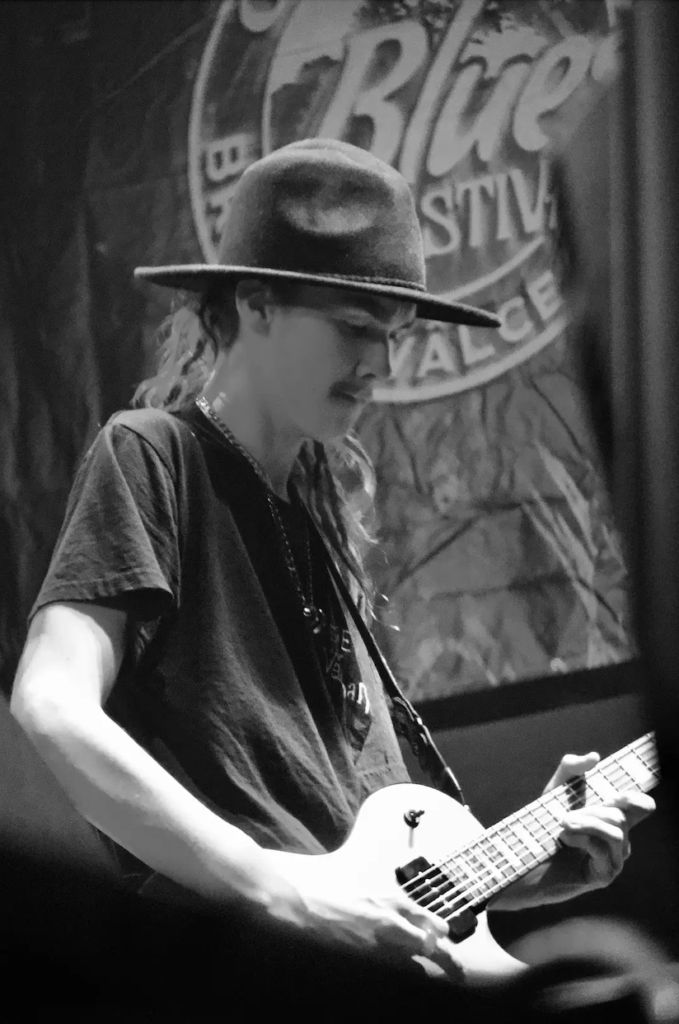
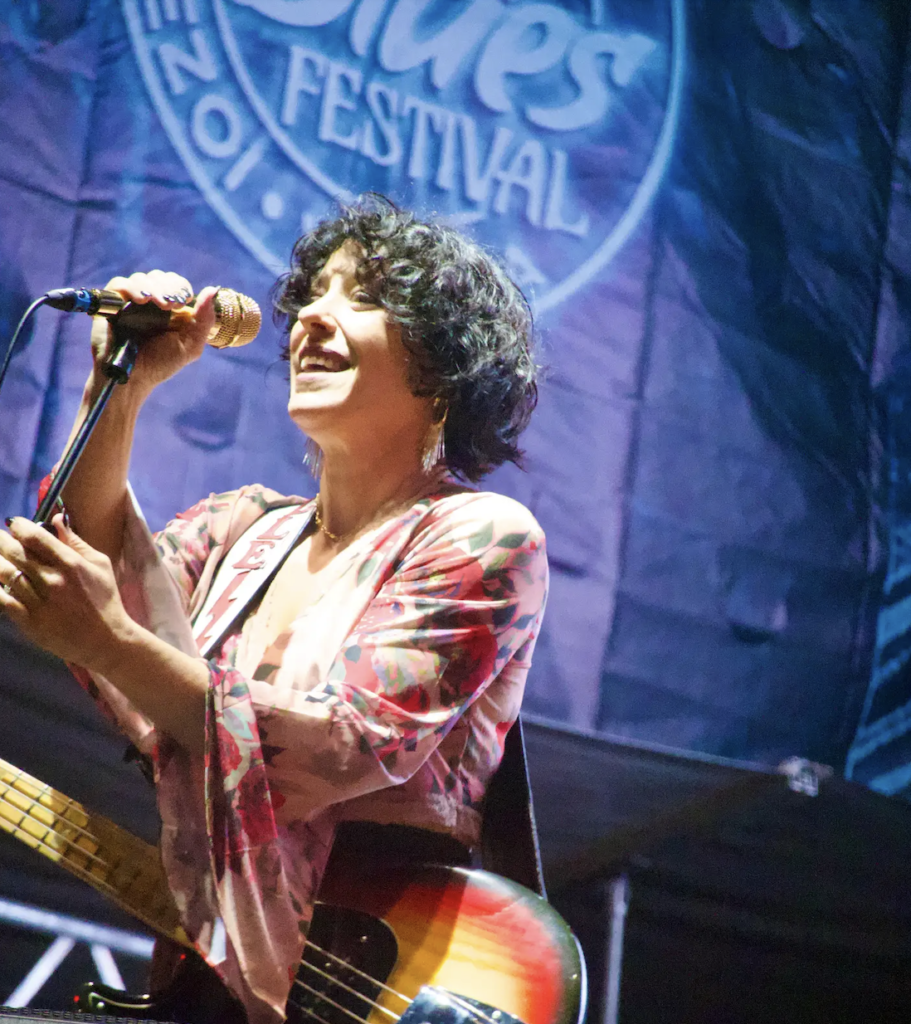
This year the lineup brought together over 40 acts , including Eric Gales, Fantastic Negrito ,
Sugaray Rayford, Danielle Nicole Band , Kenny Wayne Shepherd , Vanessa Collier, DK Harrell, Blood Brothers , Kevin Burt , just to name a few. All artists with wildly different approaches to the blues, soul and roots music. Some performances were built around raw guitar power. Others relied on vocal strength, groove, dynamics or storytelling.
But the common denominator was authenticity. And authenticity is something audiences recognize immediately.
THE GUITAR STILL SPEAKS
Few instruments are as closely associated with the blues as the electric guitar, and Open Air offered plenty of evidence that the instrument remains capable of saying something new.
Eric Gales was among the artists who demonstrated just how limitless the language of the guitar can be. Gales doesn’t approach the instrument like someone simply reproducing the blues vocabulary of the past. His playing is deeply personal—sometimes aggressive, sometimes delicate, always emotionally charged. Watching him perform is a reminder that virtuosity means very little without feeling.
Gales has both.
His fingers can move with astonishing speed, but the moments that stay with you aren’t necessarily the fastest ones. They’re the bends, pauses and phrases that seem to carry an emotional weight of their own.
That is what separates a technically gifted musician from an artist.
THE LEGACY OF GARY MOORE
Few musicians have left a deeper mark on European blues-rock than Gary Moore, and his legacy was honored at the festival through a special concert featuring musicians connected to his musical world.
Moore’s influence remains enormous.
His playing helped erase the artificial boundary between blues and rock, demonstrating that a guitarist could deliver the power of rock while maintaining the emotional vocabulary of the blues.
Hearing his music performed live in Europe carried an added significance.
The songs were familiar.
The emotion was still immediate.
And the tribute served as a reminder that great music doesn’t disappear when its creator is gone. It continues through the musicians who carry it forward.
SUGARAY RAYFORD: A FORCE OF NATURE
And then there was Sugaray Rayford.
Some artists perform for an audience. Sugaray Rayford seems to take possession of one.
The moment he steps onto a stage, there is an undeniable presence—a combination of power, soul, warmth and sheer physical energy that makes it almost impossible to look away. His voice carries the weight of the blues, gospel and soul, but his performances are anything but confined to tradition.
At Open Air Blues Festival, Rayford brought that unmistakable energy to Brezoi.
He didn’t simply sing the blues. He embodied it.
There was joy in his performance, humor in his interaction with the crowd and a deep emotional connection behind every note. His voice could move from a quiet, soulful delivery to a roar that seemed to shake the festival grounds, leaving the audience completely caught up in the moment.
And then came the groove.
Rayford has an extraordinary ability to turn a concert into a celebration. Before long, the audience isn’t simply watching—they’re moving, singing, responding and becoming part of the performance.
“Sugar, Sugar, Sugar” became one of those moments that captured the spirit of the entire festival. It was fun, infectious and impossible to resist, but underneath the celebration was something deeper: the unmistakable feeling of an artist connecting directly with thousands of people.
That is Rayford’s gift.
He can make a massive outdoor festival feel intimate.
For a few minutes, it doesn’t matter where you’re from or what language you speak. The rhythm takes over, the crowd moves as one, and the distance between performer and audience disappears.
That is the blues at its very best.
And watching Sugaray Rayford command that stage was a reminder that some performers don’t just entertain a crowd.
They change the temperature of the entire room—or, in this case, the entire festival.
MORE THAN THE HEADLINERS
One of the pleasures of a festival like Open Air is discovering performances you didn’t necessarily expect to become highlights.
The festival’s stages provided plenty of those moments.
Artists such as Vanessa Collier, Coco Montoya, Fantastic Negrito, Nikki Hill and others brought distinctly different interpretations of blues and roots music to the audience.
Collier’s combination of saxophone, vocals and commanding stage presence demonstrated how much room there still is for innovation within the blues.
Coco Montoya represented another generation of blues tradition, bringing the authority of decades on the road and a guitar style shaped by some of the greatest musicians in the genre.
Fantastic Negrito pushed the boundaries even further, blending blues with contemporary sounds and social commentary.
And Nikki Hill delivered the kind of high-energy performance that reminds you the blues doesn’t have to be quiet, restrained or predictable.
It can be loud. It can be rebellious. It can be joyous.
THE AUDIENCE BECOMES PART OF THE SHOW
Perhaps the most memorable aspect of Open Air isn’t any individual performance. It’s the audience. There is a unique energy that develops when thousands of people gather in an outdoor setting for several days with one purpose: to listen to music.
People dance. They sing along. They discover artists they may never have heard before. They talk to strangers who, within minutes, feel like old friends because they share the same musical obsession. That sense of community is becoming increasingly rare—and increasingly valuable.
For a few days, the usual distractions disappear.The phone becomes less important. The schedule becomes less important. The only thing that matters is who’s onstage.
THE BLUES AS A UNIVERSAL LANGUAGE
Perhaps that is ultimately what makes Open Air Blues Festival so special. The blues began as a distinctly American art form, but it no longer belongs to one country. It belongs to anyone who has ever experienced heartbreak, hope, loss, love, struggle or triumph.
You don’t need to speak the same language to understand a blues guitar. You don’t need to know every lyric to recognize a great singer.
You don’t need to share the same culture to feel a groove. Music takes care of that.
And Brezoi provides a remarkable setting for that universal conversation.
Surrounded by nature, with music stretching from afternoon into the evening and eventually into the night, the festival creates an atmosphere that is difficult to reproduce anywhere else.
The setting becomes part of the performance. The mountains become part of the memory.
WHEN THE MUSIC ENDS
Eventually, even the longest festival has to come to an end. The stages go dark. The crowds begin to leave. Musicians pack their instruments and prepare for the next city.
But the best festivals don’t disappear when the final note fades.They stay with you.
You remember a particular guitar solo.
A voice that stopped you in your tracks.
A musician you discovered for the first time.
A late-night performance you weren’t planning to see but couldn’t walk away from.
And somewhere along the way, you realize that the festival wasn’t simply about seeing great artists.
It was about being part of something.
Open Air Blues Festival has created exactly that kind of experience.
It celebrates the history of the blues without allowing the music to become trapped in the past. It welcomes musicians from around the world while respecting the American roots from which the music grew.
Most importantly, it reminds us that the blues is still alive.
Still evolving.
Still traveling.
Still bringing people together.
And in Brezoi, beneath the Romanian sky, it sounded as powerful and relevant as ever.
The blues may have started thousands of miles away—but for a few unforgettable days, it felt right at home.